

Analyzing retail sales data is essential for success in social commerce. It helps brands understand where demand is growing, which products perform best, and which creators influence the most purchases. One valuable source of retail sales data is TikTok Shop. The platform has transformed online shopping by combining entertainment and commerce in a single experience, allowing consumers to discover, review, and purchase products directly in the app.
TikTok’s influence extends far beyond the app itself, shaping consumer behavior and retail trends in tangible ways. At Charm, we see TikTok playing a dual role in consumer purchase behavior. While it is a bottom-of-funnel checkout channel, it’s also a top-of-funnel awareness driver. The views generated on the platform lead to enormous volumes of sales through their halo effects across other channels. In fact, we’ve spoken to 9-figure beauty brands that have seen double-digit lift in their brick-and-mortar sales directly attributable to their activity on TikTok Shop.
Even brands that do not actively sell on TikTok Shop can gain insights from its data. The platform’s metrics reveal fast-growing products, hashtag trends, price ranges, and creator strategies. These insights guide brands in developing new products, setting competitive prices, building strong creator partnerships, tapping into viral trends, and creating content that performs well across social platforms.
The Power of Retail Sales Data, Particularly on TikTok Shop
TikTok has quickly become a main hub for discovering and buying products online. Reports show that TikTok users are around 1.7× more likely to find something they like on the app and buy it right away compared to other platforms. This shows how TikTok turns casual scrolling into real shopping behavior.
For brands, this means TikTok Shop acts like a live window into customer demand. Every sale, product click, or trending video provides clues about what people want, how much they’re willing to spend, and what kind of content drives them to purchase. When brands study this sales data, they can turn it into clear actions that help them grow:
- Understand category performance so you know exactly which areas of the market are bringing in the most revenue.
- Spot winning SKUs early by watching for sharp sales jumps linked to creator videos, live shopping sessions, or trending hashtags.
- Use data to refine pricing, product, and marketing decisions instead of relying on assumptions or trial and error.
Key Insights Brands Can Unlock by Analyzing Retail Sales Data
Below are practical analyses you can run (and how to apply them), illustrated with data from September 2025 in the Beauty category from Charm’s TikTok Shop dataset.
1. Identify Top-Performing Categories and Shops
The first step to understanding TikTok Shop sales performance is knowing which categories and stores are driving the highest revenue. By reviewing retail data across categories, shops, and SKUs, brands can identify where real demand is happening and which sellers are converting that demand most effectively.
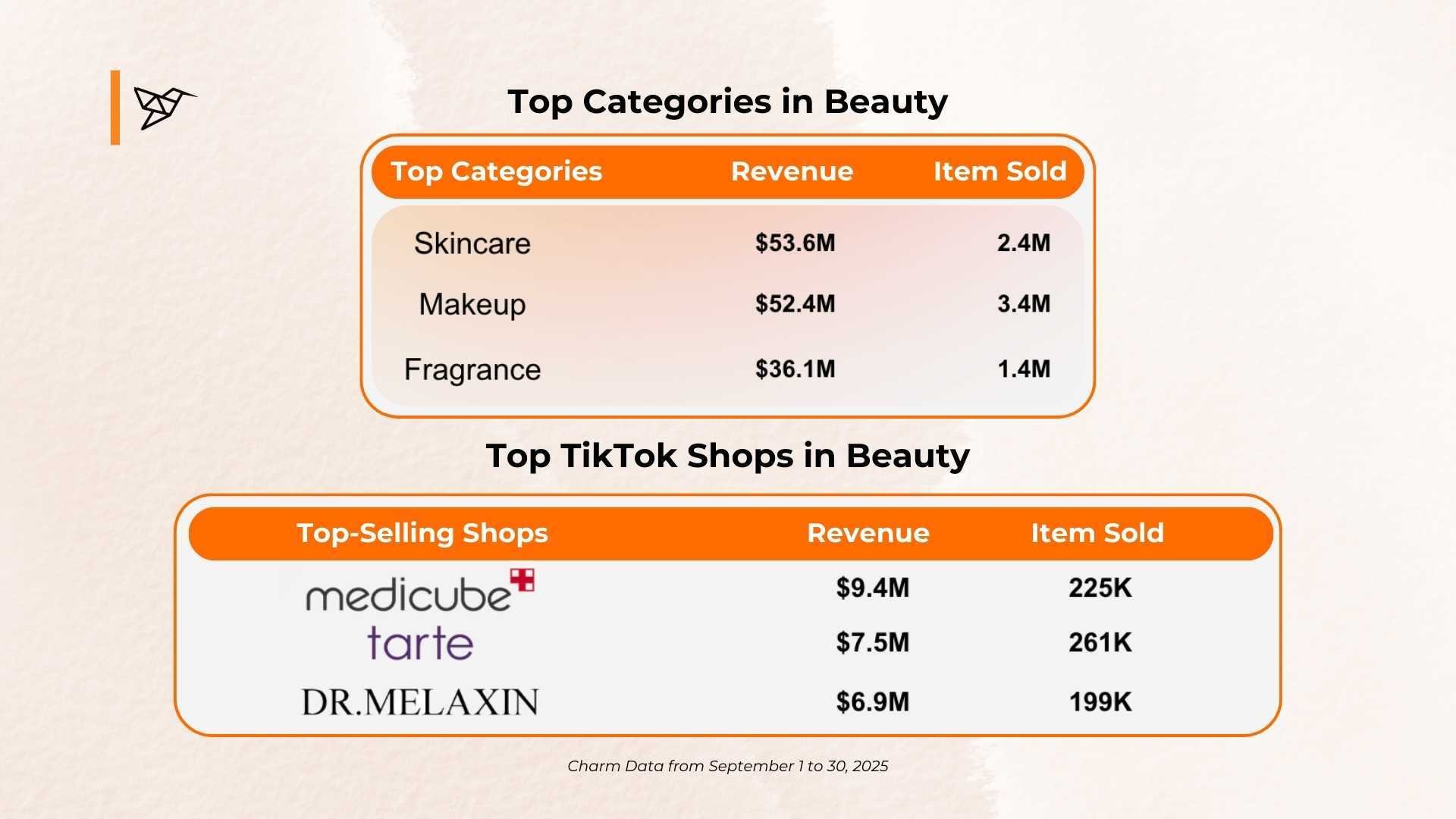
In September 2025, the Beauty category showed strong revenue patterns:
- Top Categories in Beauty
- Skincare: $53.6M
- Makeup: $52.4M
- Fragrance: $36.1M
- Top Shops in Beauty
- Medicube US Store: $9.4M
- Tarte Cosmetics: $7.5M
- Dr. Melaxin Global: $6.9M
Recognizing top-performing categories helps brands pinpoint growth areas and understand what makes competitors successful. By benchmarking against these leaders, you can set realistic goals, identify demand gaps, and craft strategies that meet proven consumer interest.
Brands can apply these insights by allocating their product development and advertising budgets to categories with the strongest revenue growth. Studying how top shops structure their product lines can inspire ways to better appeal to target audiences.
Additionally, monitoring daily sales velocity helps identify the times when engagement and conversions peak. Understanding this rhythm allows brands to schedule promotions and creator content strategically to maintain momentum and drive consistent sales.
2. Monitor Pricing to Hit the Category’s “Sweet Spot”
Analyzing sales data helps brands understand how revenue is distributed across different price ranges within their category. By looking at the average selling price of top-performing products and how discounts affect sales, brands can identify pricing strategies that maximize both sales volume and profitability while staying aligned with customer demand.
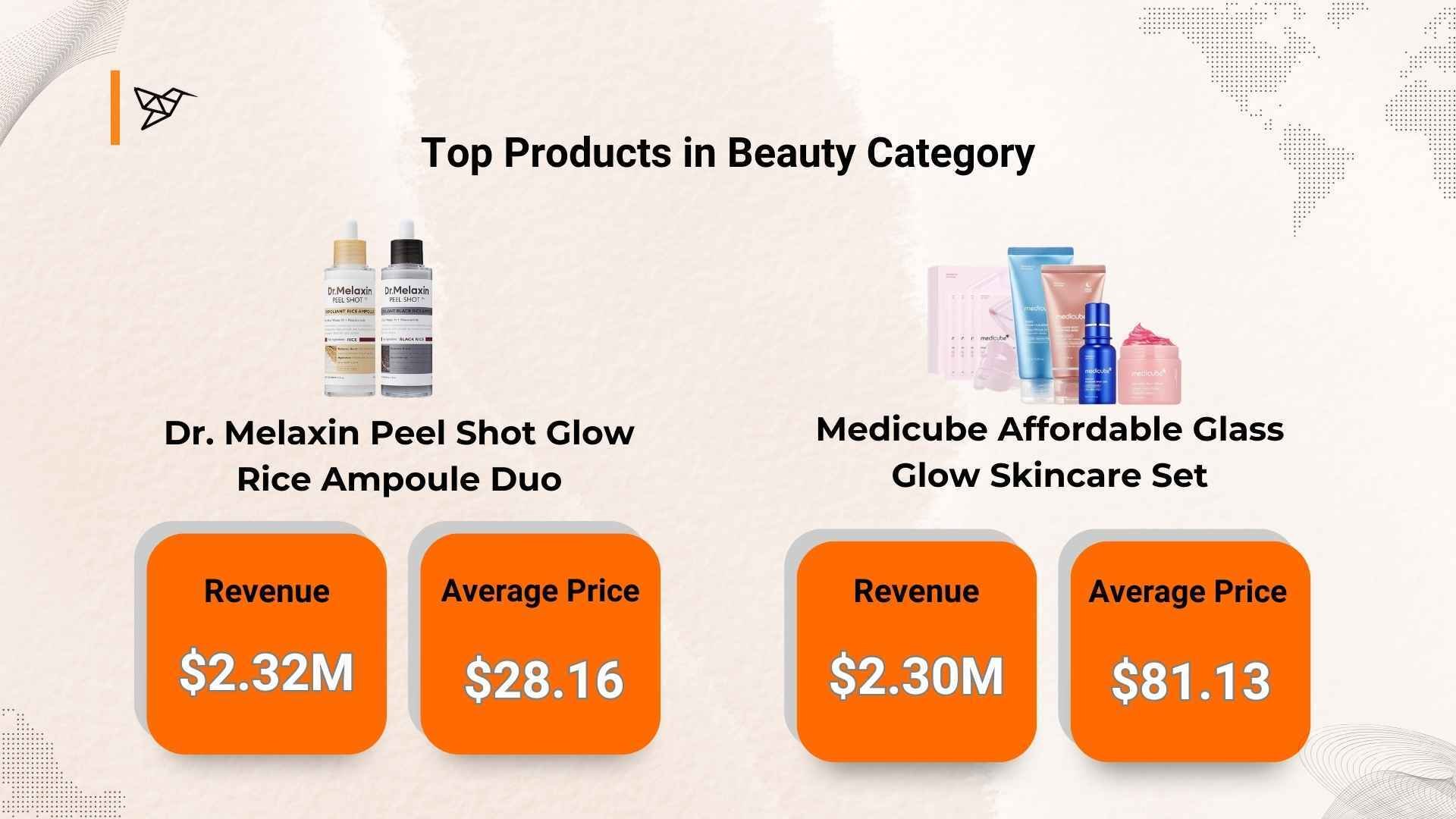
September 2025 data shows the top products in the beauty category, it includes a duo set and a bundle set of 8 products:
- Dr. Melaxin Peel Shot Glow Rice Ampoule Duo
Revenue: $2.32M
Average Price: $28.16 - Medicube Affordable Glass Glow Skincare Set
Revenue: $2.30M
Average Price: $81.13
These two products are at very different price points, showing that while many items are sold within the ~$20-30 price range, bundles retailing for $80+ are also driving sales. Contrary to popular belief, TikTok Shop is not just for cheap, impulse buys, so retailers should consider what makes the most sense for their products based on similar products that are selling on the platform.
Pricing doesn’t just affect profits; it also influences how many customers decide to buy. When a brand sets prices that match what shoppers in its category are comfortable paying, it can attract more buyers, lower the cost of acquiring new customers, and achieve better returns on its advertising.
Brands should start by mapping their catalog against the category’s price ranges to find where consumer demand is strong but their product selection is limited. This helps uncover opportunities to fill market gaps and attract more buyers.
They can also experiment with creating bundles or product sets that align with proven average selling prices. For example, offering duos or curated sets allows brands to deliver a premium feel while keeping prices within an approachable range, helping increase conversions and perceived value.
3. Run In-Depth Competitive Analysis (pricing, creators, ad spend)
Analyzing competitors’ most successful videos helps brands understand what drives sales and engagement in their category. It reveals which creators and ad investments lead to real conversions and how pricing or discount strategies impact overall performance.
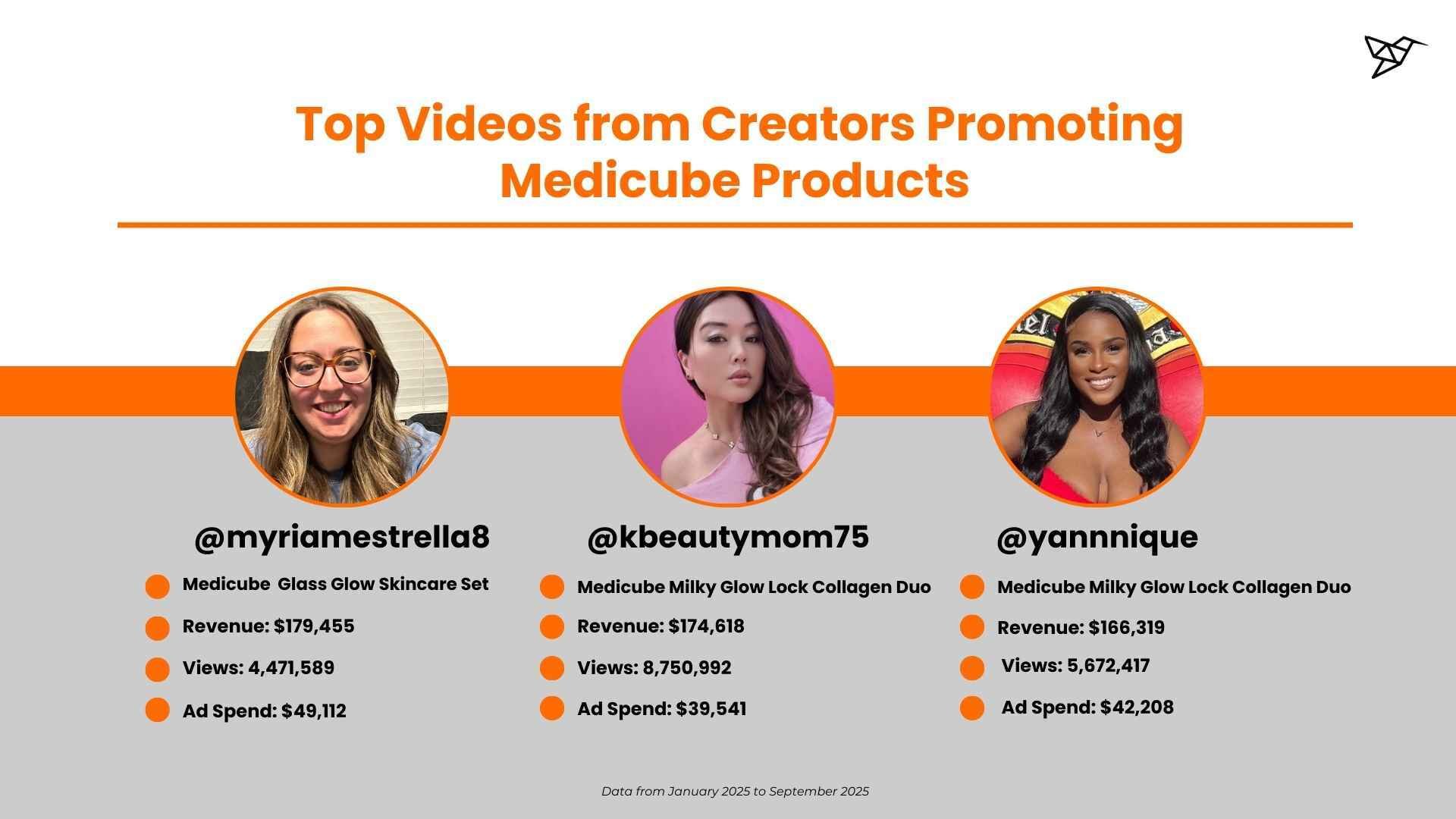
Here are examples of top videos from creators promoting Medicube products, a top-performing shop in the Beauty Category on TikTok Shop. These demonstrate how the right mix of creator partnerships and well-planned ad investments can transform high engagement into measurable brand revenue:
- @myriamestrella8 — Medicube Affordable Glass Glow Skincare Set
Revenue: $179,455 | Views: 4,471,589 | Ad Spend: $49,112 - @kbeautymom75 — Medicube Milky Glow Lock Collagen Duo
Revenue: $174,618 | Views: 8,750,992 | Ad Spend: $39,541 - @yannnique — Medicube Milky Glow Lock Collagen Duo
Revenue: $166,319 | Views: 5,672,417 | Ad Spend: $42,208
Creator mix and ad spend efficiency separate viral moments from repeatable revenue. Pairing conversion-proven creators with the right product and price unlocks durable growth.
Brands can apply these insights by partnering with creators who consistently drive strong sales within their category. Tracking the relationship between views, revenue, and ad spend helps define clear performance benchmarks for future campaigns.
Understanding competitors’ ad spend and ROAS enable brands to strategically plan their own launches and benchmark themselves against others.
4. Understand Hashtag Trends to Guide Marketing & Content
Tracking hashtag-level views and revenue over time helps brands see which trends are gaining momentum. By analyzing the creators and shops most connected to these hashtags, along with the products that dominate each tag, brands can understand how social trends directly influence sales performance and category growth.
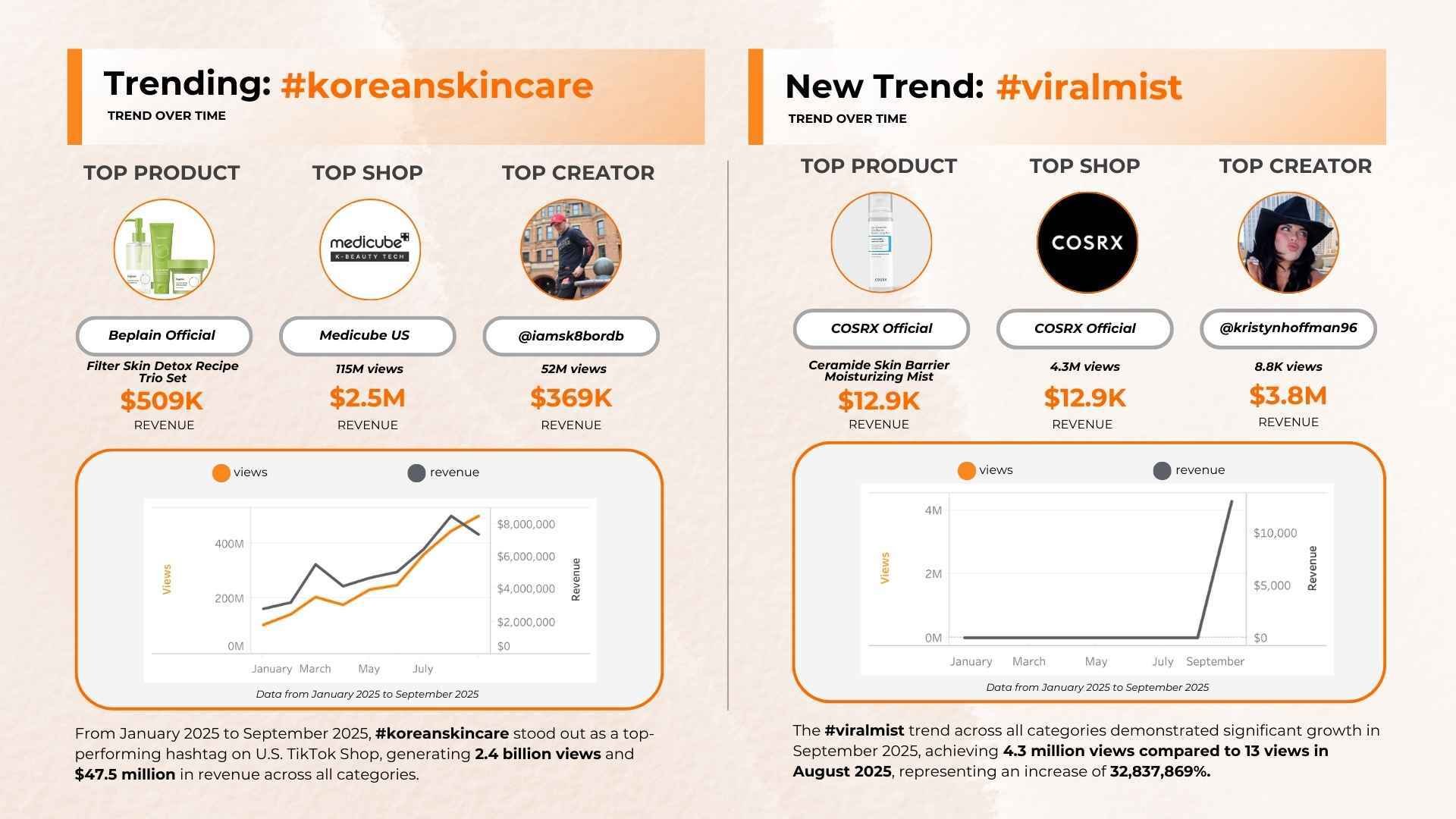
From January to September 2025, TikTok Shop data highlights the top-trending hashtags that drove sales in the Beauty category. These insights reveal which established trends drove the most engagement and which emerging hashtags are worth watching:
- Trending hashtag: #koreanskincare — 2.4B views; $47.5M revenue
- Top Shop: Medicube US — $2.5M revenue; 115M views
- Top Product: Beplain Official: Filter Skin Detox Recipe Trio Set | Glow Kit | Special Porecare — $509K revenue; 68M views
- Top Creator: @iamsk8bordb — 52M views; $369K revenue
- New trend: #viralmist (exploded from 13 views in Aug to 4.3M in Sep 2025)
- Top Shop: COSRX Official — $12.9K revenue; 4.3M views
- Top Product: COSRX Ceramide Skin Barrier Moisturizing Mist (120ml) — $12.9K revenue; 4.3M views
- Top Creator: @kristynhoffman96 — 8.8K views; $3.8M revenue
Hashtags act as signals of trending consumer interest, showing which topics, routines, and product claims are inspiring people to buy. They help brands understand the language their audience responds to and highlight opportunities to join conversations that already drive engagement.
When brands align their product launches or campaigns with these rising hashtags, they can quickly capture attention and speed up sales growth. Planning content calendars around emerging tags, mirroring the top creative styles that convert, and partnering with creators already active in these conversations can help brands stay ahead of trends and connect with audiences more effectively.
How Charm Helps Brands Leverage TikTok Shop Data
Charm helps brands turn TikTok Shop sales data into practical insights that drive real growth. Through the platform, brands can analyze revenue performance at the product, shop, and category levels to understand how they compare to competitors and identify which items are selling the most. By monitoring competitor ad spend and creator activity, teams can refine their own marketing strategies to improve ROI.
Charm also makes it easier to connect with top-performing creators driving sales in specific categories, helping brands form high-impact partnerships that boost visibility and conversion. The platform’s product and SKU-level analysis allows teams to spot assortment gaps and identify which products in adjacent brands are driving revenue, informing new product development and R&D.
Additionally, Charm enables brands to track trending products and hashtags to guide content and marketing strategies. With access to real-time trend data, brands can understand which social conversations to join and anticipate which emerging trends to leverage before competitors do.
By analyzing the top videos on TikTok Shop, Charm reveals what content formats and creator strategies generate the most engagement and revenue, empowering brands to mirror these successes both on TikTok and across other social platforms.
Book a call with Charm.io today to see TikTok Shop data on your category and build a plan that your team can execute this quarter.
See what’s trending in your industry
Charm’s Trend Watch is a monthly webinar that shares data and insights into fast-growing DTC brands, TikTok Shop trends, and strategic market opportunities.
Sign up for the Webinar