


May 14, 2026
There is a quiet battle for people’s eye lashes taking place. A fresh wave of mascara launches from major players such as L’Oréal, Estée Lauder Companies (ELC) and Coty are competing to be the go-to lash product in make-up bags.
It is no wonder that it is mascara wands at dawn.
While the wider make-up market is largely flat in terms of growth, mascara sales are on the rise and growing in value, with consumers seeking new innovation.
The category is now valued at US$2bn in the US alone, according to analyst NielsenIQ (NIQ), and is growing at a healthy 6.1% year-on-year.
This renewed momentum is being fuelled by both an expanding buyer base and higher annual spending per buyer, the data analytics firm said, which now averages at around $33.
In Europe, the mascara category represents around €340m in value over the 12 months to March 2026, according to analyst Circana.
The segment is currently stable year-on-year in the region, both in value and in units, indicating a mature but resilient category, the market research firm said.
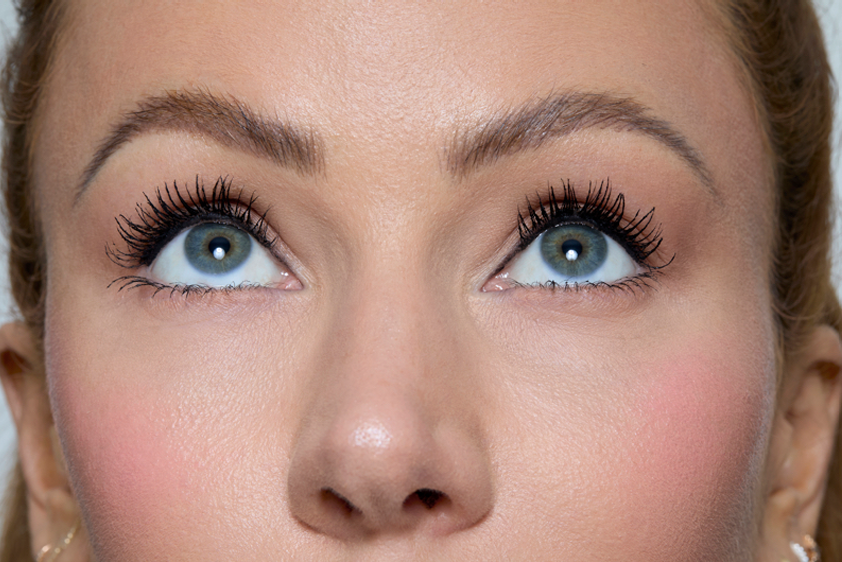 A mode wears Lash Sensational Sky High Tubes Tubing Mascara
However, there have been very strong launch performances, particularly in 2025, it added.
“New launches in 2025 significantly outperformed the previous year, with launch sales up 37% versus prior-year launches,” says Mathilde Lion, Circana’s Director of Beauty, Europe.
“This confirms that innovation remains a key growth lever in mascara, even in a relatively flat market, and that consumers keep relying on established brands.”
Mascara’s latest innovations
Last year, Too Faced – the ELC-owned colour cosmetics company which is behind regular bestseller Better Than Sex mascara – launched its first tubing mascara, Ribbon Wrapped, extending the franchise further to include a chocolate shade in March this year.
Coty’s Covergirl debuted Eye Enhancer Wrap towards the end of 2025, while unveiled Tube Job in December 2025, launching exclusively on Meanwhile, Urban Decay TikTok Shop.
Meanwhile, Extensionist Mascara is one of L’Oréal Paris’ biggest 2026 launches, and L’Oréal owned Maybelline New York – the maker of another bestseller, Lash Sensational Sky High Mascara – has just launched Lash Sensational Sky Tubes.
Milani Cosmetics also launched its Highly Rated Lash Extensions XL Volumizing Tubing Mascara, using TikTok Shop as a pre-retail launchpad to build momentum.
“At a category level, this wave of innovation reflects a higher consumer demand for visible performance improvements (length, lift, hold, smudge resistance); strong appetite for new textures and applicator technologies; and continued interest in mascara as a high-impact, relatively accessible beauty purchase,” says Lion.
Innovation remains a key growth lever in mascara
All these new launches, apart from L’Oréal Extentionist, are tubing mascaras, and mark each of the brands’ first forays into the tubing arena – a “standout innovation” within the mascara category, according to Anna Mayo, VP, Beauty Vertical, NIQ, and up 121.7% in dollar sales versus a year ago.
“Beyond driving buzz, tubing formulas are also delivering premiumisation for the category, commanding an average price roughly $10 higher than traditional, non-tubing mascaras,” she says.
“This combination of novelty and higher price points is helping elevate the category’s value, while reinforcing consumers’ willingness to trade up for perceived performance benefits.”
As well as more buyers and higher spend, consumers are also gravitating back toward prestige, according to NIQ, where mascara sales are up 9.8% in the US versus a year ago.
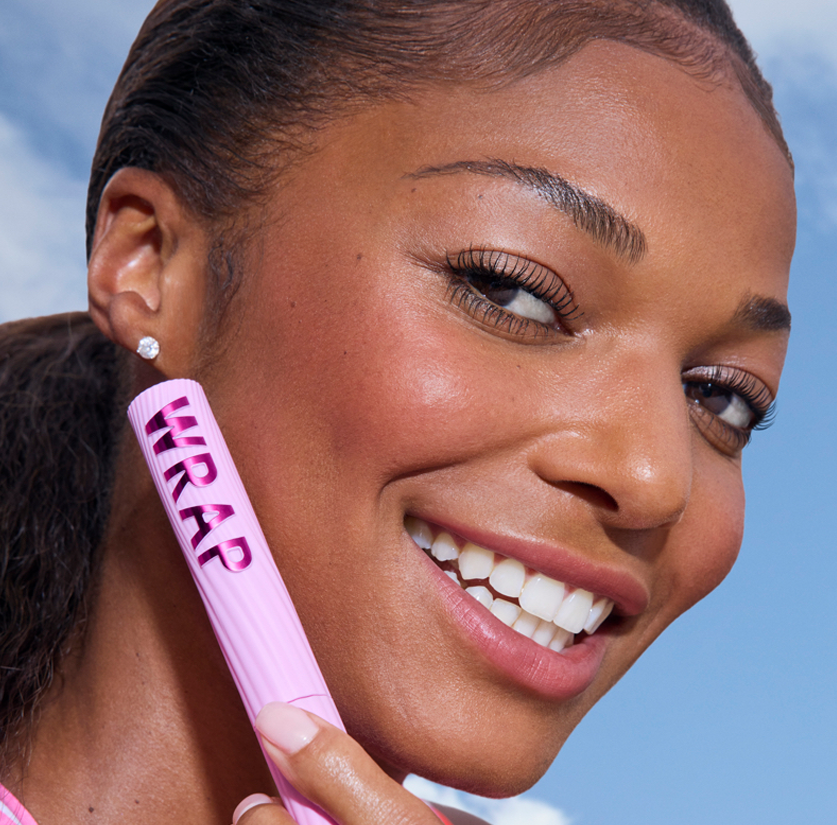 US sprinter Gabby Thomas poses with Covergirl's Eye Enhancer Wrap Tubing Mascara
This is outpacing mass brands, which are growing at a more modest 4.4%, the firm’s data shows.
In addition to tubing benefits, consumers are also seeking innovative formulas and trend-led colourways.
"There has definitely been a shift towards more treatment-led formulas,” says Emily O'Grady, Senior NPD Manager at independent lash-focused beauty brand UKLash.
“Consumers now expect mascaras to not only perform well, but also support lash health, so ingredients like peptides and conditioning actives are in demand.
“Brown mascara has become huge thanks to softer make-up trends.
“And brands are experimenting more with shades like burgundy and navy.”
Buzz-driven success
Despite the steady flow of new products and innovation in the mascara space, overall assortment has actually tightened, according to NIQ.
Brands continue to launch new items to generate buzz and maintain engagement, yet the category now carries fewer products on shelf than in previous years.
On average, there are 4.4 fewer mascara items available today compared to four years ago, NIQ data shows.
Rather than expanding shelf presence, leading brands are prioritising portfolio optimisation– refreshing core products with new and improved formulations instead of proliferating skus.
In a fast-paced beauty landscape, this approach allows brands to fuel innovation, create excitement and keep their core consumers engaged without increasing assortment complexity, the data analytics form says.
Social media is also playing a key part in driving buzz around launches.
Mascara sales on TikTok Shop US grew 276% year-on-year according to data from ecommerce intelligence platform Charm.io, significantly outpacing the broader beauty category growth of 83% revenue growth over the same period.
“Beyond direct revenue, TikTok also serves as a major awareness engine that creates a halo effect across channels,” says Alex Nisenzon, CEO of Charm.io.
“What consumers discover on TikTok often translates into purchases elsewhere, including Amazon, retail stores, and DTC [direct-to-consumer] websites.
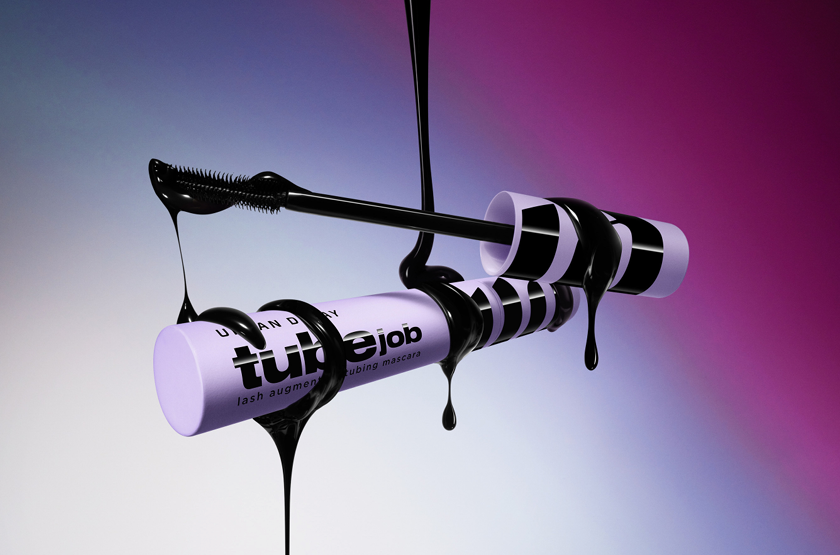 A tube of Urban Decay's Tube Job Mascara
“Over the past 12 months (May 2025 through April 2026), mascara-related products generated 2.1 billion TikTok video views, increasing visibility across 4.7K mascara products on TikTok Shop.”
Tarte Cosmetics’ Tartlette tubing mascara dominates on the platform, with sales of $4.2m since the start of the year, but new launches have quickly broken through to become top selling mascara products in terms of revenue.
L’Oréal Extensionist is the third bestselling mascara on the platform in the same period with $1.14m in sales, according to Charm.io’s data.
Covergirl’s Eye Enhancer Wrap is ninth, with $199,000 in sales, and Maybelline’s Sky Tubes in tenth position with sales of $168,000.
"What has changed in recent years is how quickly products can now gain traction,” says O’Grady.
“TikTok and short-form content have completely accelerated the category because mascara results are instantly visible.
“One strong before-and-after [image] can create huge demand almost overnight."
Winning the mascara war
There is all to play for in mascara, with frequent purchase (recommended around every three months), plus low barrier to entry in terms of affordability and access.
Consumers are also seeking out variations, from different benefits to multiple colourways.
"From a product perspective, the winner is the mascara that balances performance with wearability,” says O’Grady.
“Consumers want visible results, but they also want comfort, easy removal, no flaking and formulas that fit seamlessly into their routine.”
Clear positioning is key, too.
O’Grady adds: “The most successful new launches tend to have one very obvious strong benefit backed by authentic consumer and creator validation.”
But there is stiff competition that means brands must make sure their formulations hit the mark, particularly under the watchful eye of make-or-break content creators on social media.
The reward is big because mascara is a repeat purchase category
“For the brands that get it right, mascara can become a real hero product because it drives repeat purchase and introduces new consumers to the brand,” says O'Grady.
“But the category is incredibly crowded and consumers are quicker to move on from launches that underperform.
“With social media driving discovery at such speed, launches can gain momentum very quickly, but they can also lose it just as fast if the product does not hold up."
Alicia Grande, founder and CEO of lash-focused brand Grande Cosmetics, echoes this sentiment.
“The reward is big because mascara is a repeat-purchase category,” she says.
“If someone loves a mascara, they buy it again, talk about it, and often explore more products from the same brand.
“The risk is that mascara is very easy to judge.
“If it smudges, flakes, feels heavy or does not deliver, the customer knows right away.
“And it is very unlikely that they will give it (or any other mascara they launch) another chance.”